I started providing healthy relationship education to students in middle and high schools over 20 years ago. I talked to students about building healthy communication skills and finding youth-appropriate resources they could access in their communities for support.. Despite my presence in classrooms, not all students had the opportunity to learn about healthy relationships. At that time, it was up to individual schools and teachers as to whether students received this information, even though almost half of all teens have experienced some type of abuse in a relationship, and teen dating violence is often an indicator of future domestic violence in adult years. This meant that some students learned to recognize warning signs of abusive relationships and attended schools with the resources to support them. However, other students, parents, and educators were shocked when the outcome of some of these abusive relationships ended in murder, leaving their community to cope with trauma in isolation.
The California Partnership to End Domestic Violence (the Partnership) and our partners fought for the California Healthy Youth Act (CHYA) to change all that. Entered into law in 2016, CHYA requires school districts to teach sexual health and HIV prevention to all students in grades 7 through 12. CHYA’s passage was a pivotal moment for increasing student safety across all campuses. Through this law, the State aims to provide students with the knowledge and skills necessary to protect their sexual and reproductive health from HIV, sexually transmitted infections (STIs), and unintended pregnancy and to have healthy, positive, and safe relationships.
But following the law was another story. For many years, my colleagues across the state echoed my frustrations, saying that schools were skipping critical lessons on healthy relationships—lessons mandated by CHYA. So in 2025, the Partnership and our partners made the case for a formal state audit to survey all districts in the state—and we succeeded. This was a huge win for students and advocates who provide this kind of education to them.
The results confirmed what they said. Last October, the audit report found that between 10% and 30% of school districts in California do NOT meet the requirements set by CHYA.
The law can only go so far if it isn’t implemented. The fact that there are still students not receiving comprehensive sex education means that there are students who still don’t know that there is support out there for them. This is especially harmful to LGBTQIA+ students: violence targeting LGBTQ youth increases feelings of hopelessness, suicide ideation, and absenteeism in school.
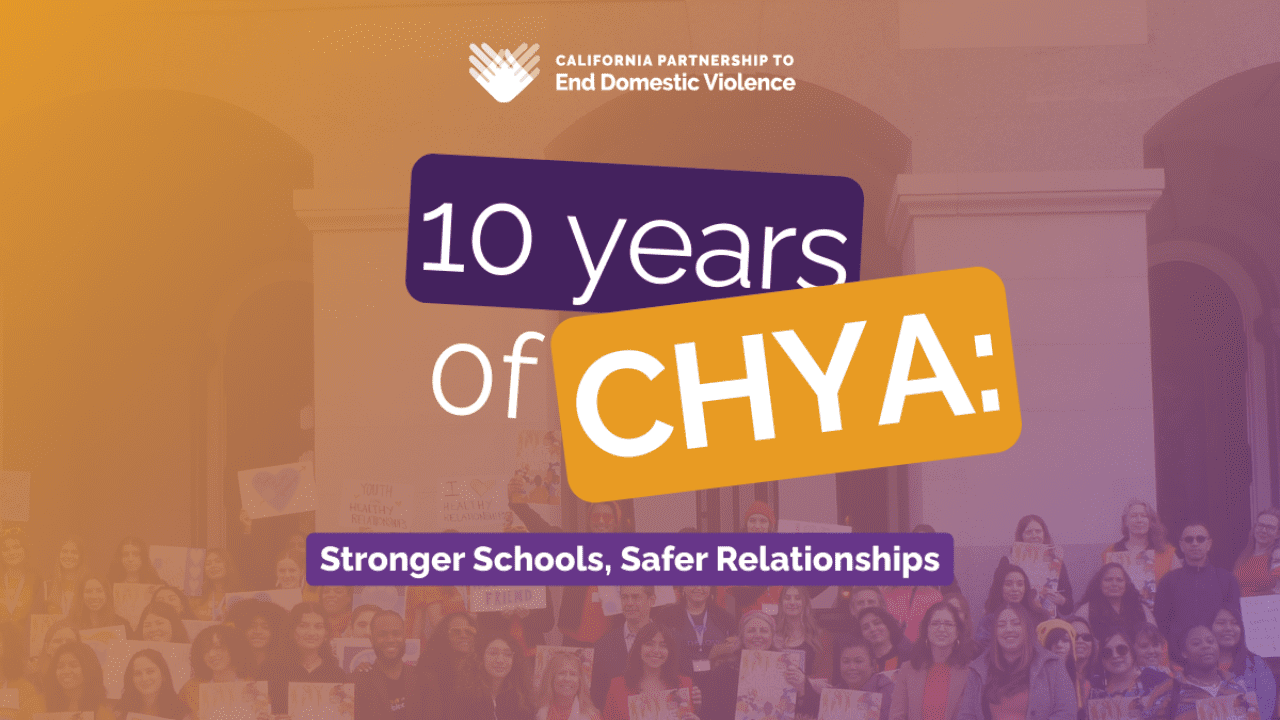
Where a student attends school should not determine their safety. As we celebrate the 10th anniversary of the passage of CHYA, we are still dedicated to ensuring that all schools in California meet CHYA requirements and expand educational equity for all students. Join the Partnership in strengthening the implementation of CHYA by donating today. Together, we can foster healthier, safer educational environments.